
Title:
Design and Development of a Blended MOOC Implementation Framework for Undergraduate EFL Programmes
Author:
Supervisor:
Department:
Management
Year:
2026
URL:
Abstract:
As universities continue to expand digital and blended learning opportunities, the effective integration of Massive Open Online Courses (MOOCs) into undergraduate English programmes has become an impo...
View more
Multimedia Content:
01
Methodology
1. Needs Analysis Survey
A quantitative needs analysis survey was conducted among undergraduate English major students to examine their perceptions, challenges, acceptance, and intention to use ble...
View more
02
Citation Analysis
1. Computers & Education
Scope: Educational technology, online learning, digital transformation, and learning analytics.
Relevance: Highly relevant because the thesis focuses on MOOCs, blended lea...
View more
03
Impact
1. Technical Impact
This research provides a validated and structured framework for implementing blended MOOCs within undergraduate EFL programmes. By integrating pedagogical, technological, and le...
View more
04
Benefits to Society
1. Environmental Benefits
The adoption of blended MOOCs can reduce dependence on traditional classroom-based teaching and printed learning materials. Increased use of digital resources minimizes pa...
View more
05
Applications
1. Blended EFL Curriculum Development
Benefit: Provides a structured framework for integrating MOOCs into English language programmes.
Implementation: Universities can align course objectives, lea...
View more
06
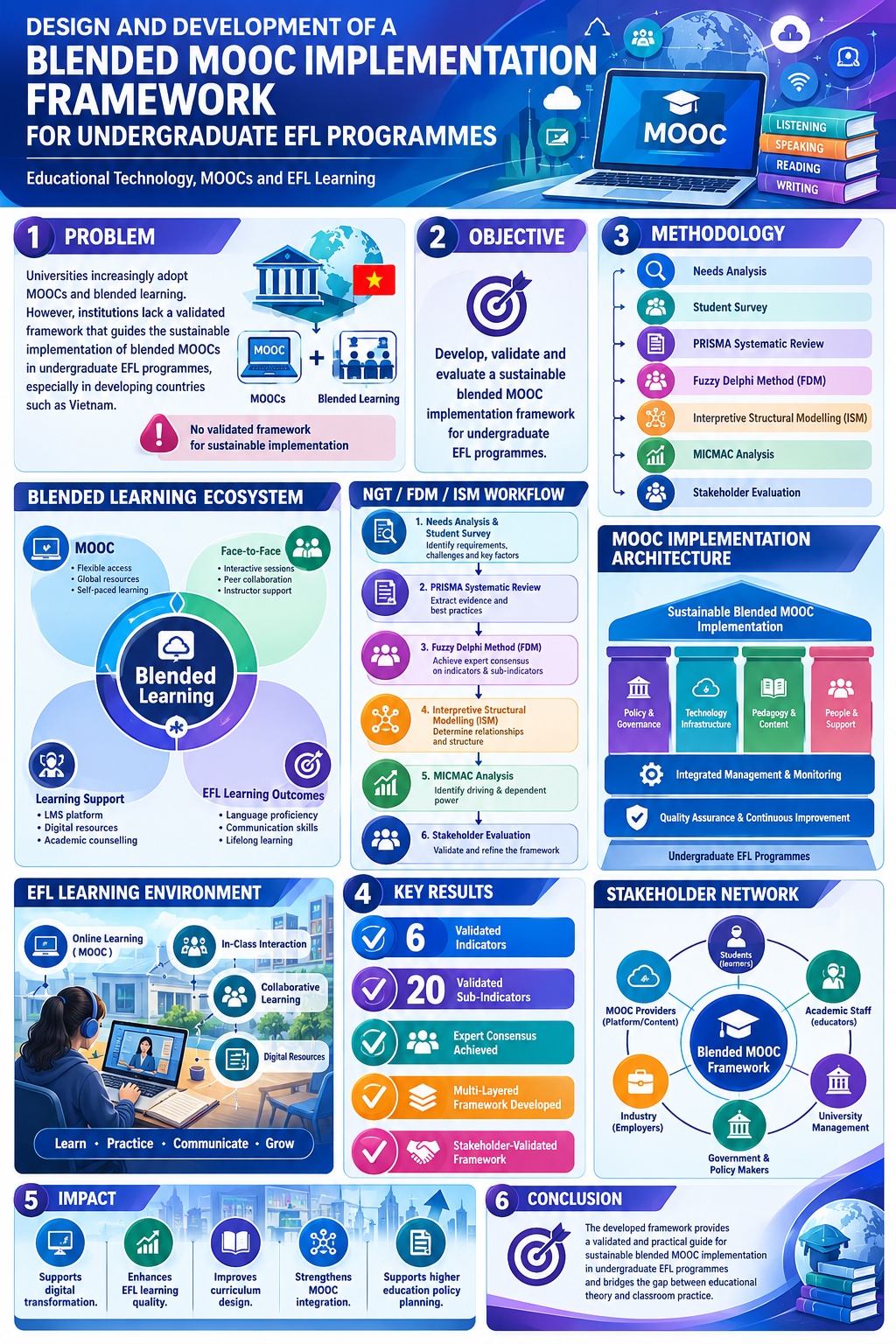
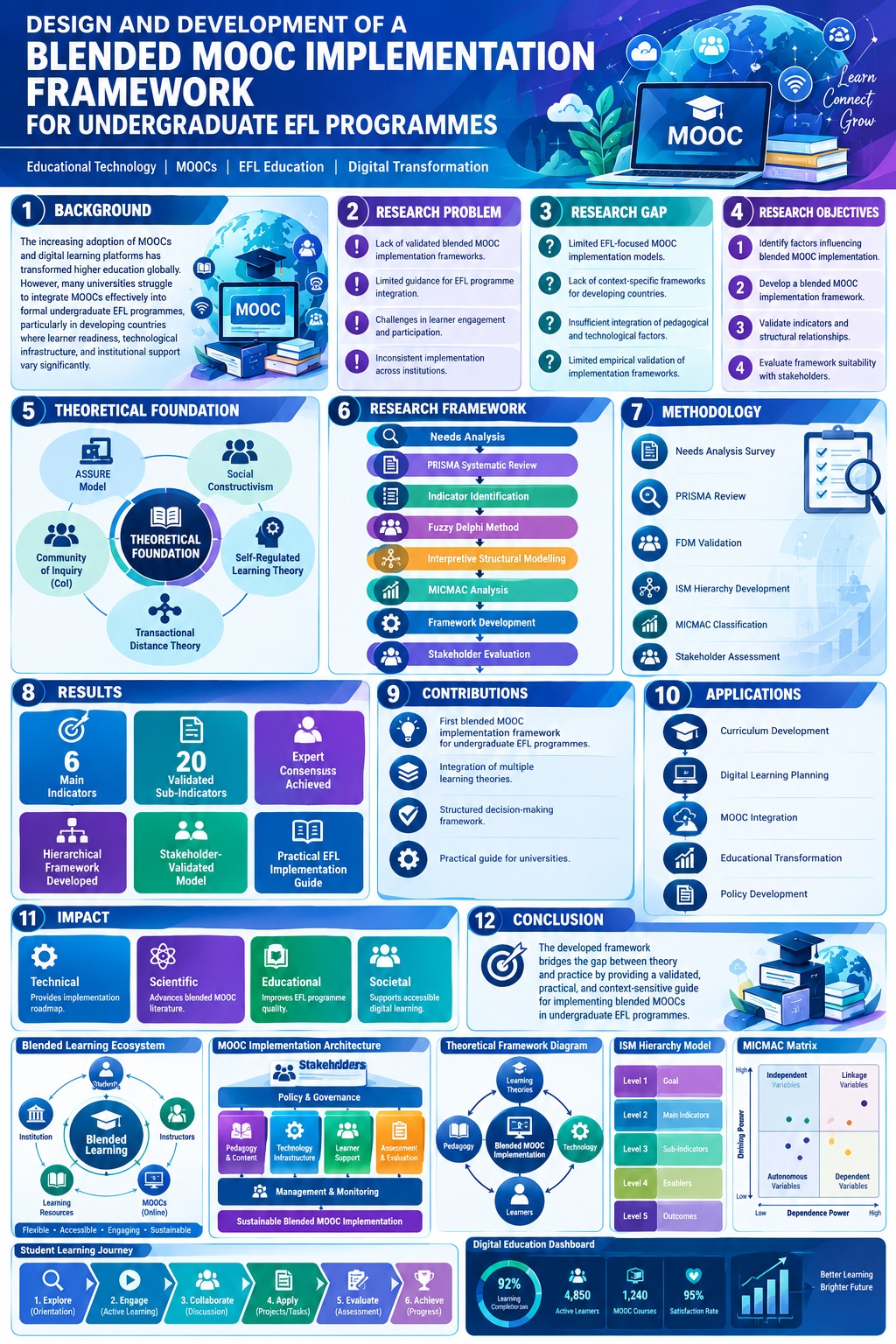
Infographic
Summary of this Thesis
07
Patents / Products
Product Name:
Blended MOOC Implementation Framework for Undergraduate EFL Programmes
Significance:
The framework provides a comprehensive and validated guide for integrating MOOCs into undergradu...
View more
08
Experts
1. A.P. Dr. Muhammad Ridhuan Tony Lim Abdullah
Institution: Universiti Teknologi PETRONAS (UTP), Malaysia
Contribution: Main supervisor for the development and validation of the blended MOOC imple...
View more